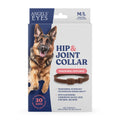
Angels’ Eyes Hip & Joint Supplement Collar represents breakthrough joint care technology using patented Micro Transdermal Delivery to provide consistent, long-acting joint and mobility support. Unlike oral supplements requiring daily administration, this collar continuously releases glucosamine, MSM, chondroitin sulfate, curcumin, willow bark, and bromelain directly through the skin for 30 days. Each active ingredient targets distinct aspects of joint health—cartilage maintenance, inflammation reduction, pain management, and mobility optimization. Ideal for dogs experiencing early osteoarthritis, senior dogs with age-related joint decline, active dogs needing preventive joint support, and any dog requiring consistent joint care without daily pill administration.
The patented Micro Transdermal Delivery system uses sophisticated polymer technology to suspend active ingredients in a skin-contact matrix. As the collar rests against the dog’s skin, these microscopically-sized particles permeate through the dermal layers at a controlled rate, releasing ingredients into systemic circulation continuously over 30 days. This delivery method bypasses first-pass liver metabolism that often reduces the effectiveness of oral supplements, allowing active ingredients to reach joint tissue at higher functional concentrations. The six active ingredients work synergistically: glucosamine and chondroitin support cartilage matrix integrity, MSM provides bioavailable sulfur for connective tissue, curcumin and willow bark reduce inflammatory cytokines, and bromelain (pineapple enzyme) further modulates inflammation. Together, they provide multi-mechanistic joint support superior to single-ingredient supplements.
All ingredients work synergistically through the unique transdermal delivery system, maintaining effective concentrations throughout the 30-day cycle.
Angels’ Eyes Hip & Joint Collar is appropriate for any dog experiencing joint challenges or at risk for osteoarthritis. Senior dogs (ages 7+) benefit from preventive support addressing age-related joint decline. Dogs diagnosed with early osteoarthritis (approximately 1 in 5 dogs experience osteoarthritis by age 10) find pain relief and improved mobility with consistent collar use. Large breed dogs genetically predisposed to hip dysplasia and joint issues benefit from early intervention with transdermal support. Active dogs engaged in agility, running, or competitive activities appreciate preventive joint care extending athletic longevity. Dogs recovering from orthopedic surgery (post-ACL repair, joint surgery) accelerate healing with inflammation-reducing ingredients during critical recovery windows. Small dogs and medium dogs experiencing mobility decline due to age or activity level respond equally well to transdermal joint support.
The Hip & Joint Collar functions like a standard dog collar and is worn continuously for 30 days. Measure your dog’s neck to ensure proper fit using the two sizes available: Small (14.5 inches, up to 17.5 lbs) and Medium/Large (25 inches, over 17.5 lbs). The collar should sit snugly against the skin without cutting off circulation—you should be able to fit one finger comfortably between collar and neck. For optimal ingredient absorption, maintain consistent skin contact; occasional collar removal (bathing, swimming) doesn’t significantly impact effectiveness. After 30 days of wear, replace with a fresh collar to maintain continuous joint support. Simply remove and dispose of the used collar and fit a new one using the same sizing. No application, refilling, or maintenance required.
Most dogs show initial mobility improvements within 3-5 days as anti-inflammatory ingredients accumulate in joint tissue. Owners report increased willingness to climb stairs, jump onto furniture, play actively, and engage in walks—behaviors often limited by joint pain. Pain modulation (through willow bark and curcumin) typically precedes structural improvement, so functional benefits appear before cartilage rebuilding completes. Over the 30-day cycle, cartilage matrix support (glucosamine and chondroitin) accumulates, providing progressive structural support. Dogs showing the most dramatic improvement are those catching joint issues early; senior dogs with chronic osteoarthritis show meaningful pain reduction and improved quality of life rather than complete reversal. Continuing with subsequent collars maintains improvements; discontinuing allows gradual regression as joint-supporting ingredients clear systemic circulation.
Frequently Asked Questions
Q: How is the transdermal collar better than oral joint supplements?
A: Oral supplements undergo first-pass liver metabolism, reducing bioavailability and requiring large doses for system effects. Transdermal delivery bypasses this metabolism, allowing consistent systemic levels throughout 30 days without daily administration or GI upset. Transdermal dosing typically requires 30-40% less active ingredient while achieving equal or superior results.
Q: Will the collar cause skin irritation or hair loss?
A: The collar is designed for comfortable extended skin contact. Most dogs show no irritation. Dogs with sensitive skin should have collar placement monitored for 2-3 days of initial wear to confirm compatibility. Removing the collar weekly for cleaning and rotation around the neck prevents localized pressure.
Q: Can puppies wear this collar for preventive joint support?
A: While safe, preventive joint support is most valuable starting at age 5-6 (when cartilage maintenance becomes increasingly important) or when puppies show early joint sensitivity. Young, healthy puppies typically don’t require joint supplementation unless they have genetic predisposition to dysplasia or show clinical signs.
Q: Do I need to remove the collar for bathing or swimming?
A: Brief water exposure during bathing doesn’t damage the collar. Extended swimming or submersion should be avoided. After water exposure, pat the collar dry. Occasional water contact doesn’t significantly reduce effectiveness, but regular swimming may warrant collar removal during aquatic activities.
Q: How long before I see results?
A: Initial pain modulation effects appear within 3-5 days as willow bark and curcumin reduce inflammation. Mobility improvements follow within 1-2 weeks as anti-inflammatory effects compound. Full structural support benefits take the complete 30-day cycle, so maximum improvement appears at cycle end. Dogs not showing results within 2 weeks may need dosing adjustment or larger collar size.
Q: Can I use the Hip & Joint Collar alongside oral joint supplements?
A: While generally safe, combining supplements risks exceeding recommended ingredient doses. Discuss with your veterinarian before combining multiple joint products to establish appropriate total dosing and monitor for excess.
Q: Is the collar waterproof?
A: The collar tolerates brief water exposure and light rain but is not fully waterproof. Extended submersion can damage the transdermal matrix. For dogs spending significant time in water, remove the collar or choose water-resistant activities.
Q: How do I know when to replace the collar?
A: The collar lasts exactly 30 days of continuous wear. Mark your calendar at fitting date; replace on day 30. Do not attempt to extend a collar beyond 30 days—active ingredient concentration depletes, reducing effectiveness.
Q: Will my dog accept wearing a collar for 30 days continuously?
A: Most dogs adapt within 1-2 days to continuous collar wear. Since this functions like a standard collar (not a medical device), most dogs quickly forget they’re wearing it. Ensure proper fit—too-tight collars create ongoing discomfort; too-loose collars slip and require constant refitting.
Pair the Hip & Joint Collar with Angels’ Eyes pain management and mobility products for comprehensive joint care. For dogs experiencing significant pain alongside mobility loss, layered approaches combining multiple support modalities often yield better results than any single product alone. Particularly for senior dogs or those with advanced osteoarthritis, the collar provides systemic support while targeted topical treatments address localized pain.